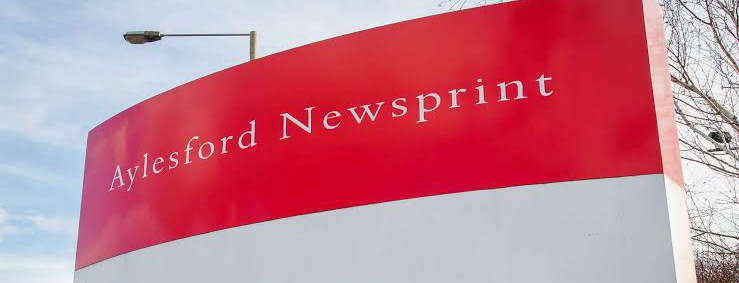
Kent has a long association with papermaking in the UK, and so it’s no surprise to find one of the world’s top producers of recycled newsprint located within the Garden of England. Below are some key historical facts that show how the industry developed in the South East and how Aylesford Newsprint became one of the best-known names in the industry.
1588
The earliest records of papermaking in Kent date to 1588, when German-born John Spilman set up a mill in Dartford in the north of the county. Dartford Borough Council records papermaking as one of the town’s major historic industries.
1850
Kent was home to around 60 paper mills, many located in the Maidstone area. Two are known to have been sited near Aylesford. The growth of mills during this period formed part of the wider expansion of the British paper industry.
1889
Albert Reed bought a mill in Dartford, a town already well established for its industrial heritage.
1894
Albert Reed expanded his operation by purchasing an existing mill in Tovil, eight miles from the current Aylesford site.
1917
Albert Reed, together with his sons Ralph and Percy, acquired a plot of land at Aylesford.
1922
The first two paper machines, named No. 1 and No. 2, went into newsprint production.
1957/58
Papermaking machine No. 13 was installed. It would go on to become an important part of paper production at Aylesford Newsprint.
1962
A new research and development building was opened at Aylesford, where research was carried out into waste recycling and paper de-inking techniques.
1969
Phase 1 of the de-inking plant was commissioned. The enlarged plant provided approximately 1,600 tonnes of de-inked paper a week.
1984
Following the closure of the three Machine Glazed paper machines at Aylesford, the de-inked pulp became available to produce 100% recycled newsprint.
1993
In December 1993, SCA entered into a joint venture with Mondi to form the Aylesford Newsprint group of companies. At that time, a project was approved to construct a new recycling and papermaking plant at a cost of £250 million.
1995
Papermaking machine No. 14 was commissioned in May. PM14 was designed to produce high-quality newsprint to meet the changing demands of higher-speed printing and the increasing use of colour photography.